For the Proctors who stayed in England, the path ran through stone and paperwork. The most dramatic English rise belonged to Sir Stephen Proctor of Yorkshire. He built Fountains Hall in the Yorkshire dales between 1598 and 1611. The Hall still stands today, a Grade I listed building owned by the National Trust. It sits inside a UNESCO World Heritage Site at Studley Royal Park near Ripon.

Sir Stephen and the Abbey Stone
Stephen Proctor was a Yorkshire landowner with a sideline in mineral speculation and finance. He was knighted by James I in March 1604, the year after the king came south. His Hall is a late Elizabethan prodigy house in the grand Jacobean style. It was possibly influenced by the work of Robert Smythson, the great Elizabethan architect. Proctor built it from stone quarried out of the ruins of Fountains Abbey itself. Henry VIII's commissioners had dissolved the Cistercian house only sixty years earlier. The new Hall sat directly above the bones of the old monastery. It was a Protestant statement made in the older Catholic stone of the abbey.
In July 1604, Prince Charles travelled south from Scotland to London with his retinue. He stopped at Fountains Hall on the way to take Proctor's hospitality. Stephen Proctor later complained the royal visit had been disrupted by Sir John Yorke. Yorke was his Yorkshire neighbor and the man Proctor was feuding with for years. The two kept up the quarrel until Proctor's death in 1619 closed it down.
His widow Honor moved away from the Hall and lived afterward at Cowling Hall. The property passed eventually to the Messenger family, then to the Aislabies of Studley Royal. The Proctors of Fountains had had their moment in the documentary record of England.
The Victorian Procters
The Fountains Proctors weren't the only English bearers of distinction in the name. The 19th century produced an unexpected cluster of remarkable Procters and Proctors.
Adelaide Anne Procter, born in Bloomsbury in 1825, became Queen Victoria's favorite poet. Coventry Patmore said the demand for her work exceeded that of any English poet save Tennyson. Her lyric 'A Lost Chord' was set to music by Arthur Sullivan in 1877.
It became the most commercially successful song of its decade on both sides of the Atlantic.
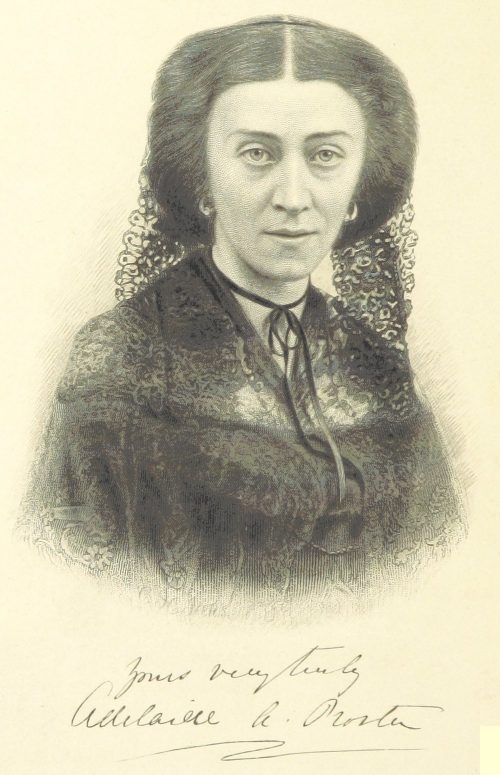 She was the daughter of poet Bryan Waller Procter (known by the pen name "Barry Cornwall"). Much of her poetry was published in Household Words and All the Year Round, periodicals edited by famed writer Charles Dickens.
She converted to Catholicism, helped found the English Woman's Journal, and worked among London's poor. Poor thing, she died of tuberculosis at 38, and the British press called her death a national calamity.
Adelaide Anne Procter - a wonderful life cut short
The Astronomer of Chelsea
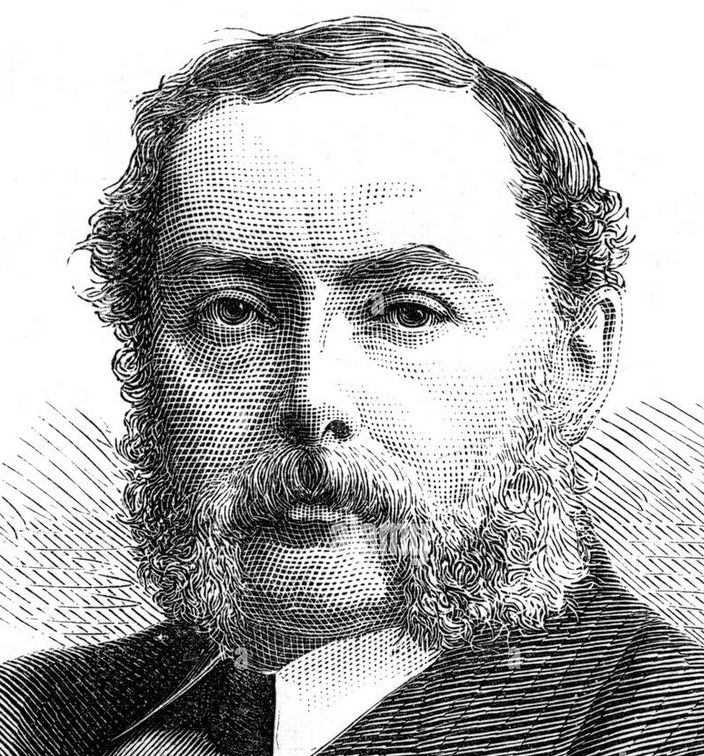 Richard A. Proctor, born in Chelsea in 1837, became the great Victorian popularizer of astronomy. He produced one of the first usable maps of Mars in 1867 from 27 drawings. He named its features after astronomers, and his nomenclature lasted a full generation. The Italian astronomer Schiaparelli eventually replaced his system with the canals-of-Mars one. That Italian system would haunt Edwardian science fiction for the next forty years. Proctor calculated the Martian sidereal day to within hundredths of a second of modern values. He founded the popular science weekly Knowledge in 1881 from London. The crater Proctor on Mars now bears his name in honor of that first map. He died of yellow fever in New York in 1888 on an American lecture tour.
The Through-Line
These English Proctors shared something with their medieval ancestors at heart. They worked for a public bigger than themselves and acted on its behalf. The medieval proctor represented a bishop, a college, or a town in court. The Jacobean Stephen Proctor built a Hall from a dissolved abbey on a public site. The Victorian Procters wrote for the readers of Dickens and audiences of public lectures. They shaped how ordinary English people thought about poetry and the planets above. The name kept its old meaning of acting for others, even after the office vanished.